The Leadership Layer of AI Decisions
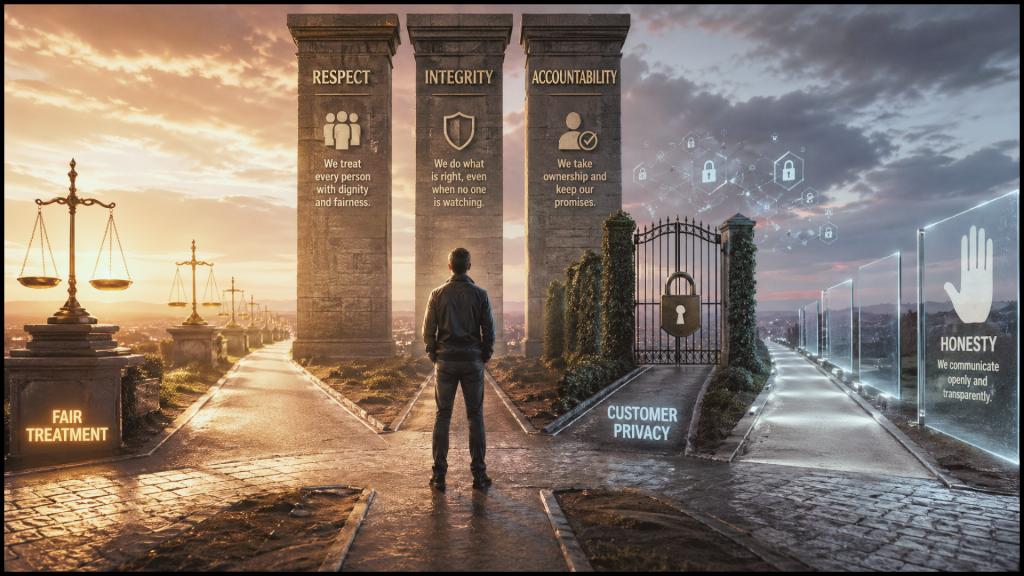
The decisions you make about AI in your day-to-day work are part of a wider set of decisions made by senior leaders. Senior leaders decide what gets bought, what gets paused, and what is allowed. These are decisions made at a level above your work. Knowing what shapes them helps you understand your own work and contribute to it well.
In this section, you will learn:
- how leadership influences decisions when an organisation adopts AI
- how values, policies, and strategy shape those decisions
- what makes a business case for AI responsible
- how AI decisions are made in practice within organisations
What leadership decides about AI
When senior leaders look at AI, they are not asking “which tool fits this task” or “how should this be set up”. Those are questions for the people doing the work. Leadership is asking bigger questions, earlier in the process, where the consequences of getting it wrong are bigger.
There are five things that usually sit with leadership.
Direction
Setting the direction
Leadership decides whether the organisation will be quick to adopt AI, slow to adopt it, or somewhere in the middle. They decide which parts of the organisation should focus on AI first and which should wait. They also decide what AI is for in this organisation. Some adopt it to save money. Some adopt it to do new things. Some adopt it because their customers or competitors expect it.
Values
Setting the values
Leadership decides what the organisation is willing to publicly support when AI is being used. Some uses of AI fit what the organisation says it stands for. Other uses do not. This shapes day-to-day decisions, often in ways the people doing the work do not see directly.
Policy
Setting the policy
Leadership decides the rules for AI use inside the organisation. Good policy usually covers:
- which tools are approved
- which uses are allowed and which are not
- how data should be handled
- when staff need to tell others they have used AI
- who is responsible for which decisions
Policy is how values and direction become rules that people have to follow.
Risk
Setting the risk position
Leadership decides how much risk the organisation is willing to carry when it adopts AI. An organisation that is cautious about risk will move slowly and check things carefully. An organisation that is more willing to take risks will move faster, but accept that more things might go wrong. Sometimes leadership says this position openly. More often, you can see it in the pattern of decisions made over time.
Resources
Allocating resources
Leadership decides:
- how much money goes into AI work
- what teams are built
- what suppliers are used
- what training is provided
Where the money and the people go often tells you more than the written strategy does. The pattern of spending shows what the organisation is really focused on.
The stated position and the actual position
Most organisations say something about how they approach AI. They might say it on a website, in a public statement, or in internal communications. What the organisation actually does often tells a different story.
You can see the actual position in which projects get funded, which concerns get heard, and which decisions move quickly while others get stuck. These patterns show what is really shaping leadership choices.
Both versions matter. The stated position tells you what the organisation wants to be seen as. The actual position tells you what it is. Understanding an organisation properly means looking at both.
See it in action
A medium-sized organisation says publicly that it adopts AI “carefully, with human oversight and proper ethical thought”. That is its stated position.
Over six months, a number of decisions get made.
A new AI tool is approved for the customer service team after a careful review of how it handles personal data. A planned use of AI for performance reviews is paused after staff raise concerns about fairness. One supplier is chosen over another because they give clearer information about how their AI was built. Two members of staff who flag a problem with how an AI tool is being used are listened to, and the use is changed.
Some decisions go the other way. A useful AI tool is rolled out faster than the policy says it should be, because a senior leader pushes for it. One team starts using an AI tool that has not been formally approved, and nothing is said about it for several months.
Looking at the full set of decisions, the organisation’s actual behaviour mostly matches its stated position. There are some gaps. Most of the gaps come from individual leaders moving faster than the policy in specific situations.
The point is that leadership decisions are rarely single moments. They are patterns over time, and the pattern is what tells you the real position.
Values, policy and strategy
Three things shape the decisions leadership makes about AI. It helps to look at each one separately, because each does a different job.
Values
Values
Values are what the organisation says it cares about. They are what it is willing to publicly support and defend.
Values usually came before AI. They are the organisation’s existing position on its people, its customers, and the way it does business. AI use then has to fit those values, or it tests them.
A commitment to fair treatment of staff is tested when AI starts to replace jobs people used to do. A commitment to customer privacy is tested when AI uses customer data in new ways. A commitment to honesty is tested when AI is used in ways customers might not expect.
Where AI use does not fit the values, something has to change. Either the AI use changes, or the values do. Recognising that point clearly is part of leadership at this level.
Policy
Policy
Policy is what the organisation has written down about what will and will not be done.
Good AI policy usually covers:
- which tools are approved for use
- which uses are not allowed
- how data should and should not be handled
- when staff need to tell others they have used AI
- who has to approve new uses
Values are what the organisation believes. Action is what the organisation does. Policy is what turns the first into the second.
Where policy is silent, values and direction are all there is to guide staff. That can lead to staff making different choices in similar situations. The organisation is then not working in one steady way.
Policy at this level is also a public commitment. Once it is written down and shared, the organisation has said it will follow it. People notice when it does not.
Strategy
Strategy
Strategy is what the organisation plans to do about AI over time. This usually covers:
- which areas will be developed
- which will wait
- what will be invested in
- what the organisation is trying to achieve
Strategy is usually set every year or every few years, then reviewed as things change.
Where strategy is clear, specific decisions about AI can be checked against it. Does this fit the strategy or not? Where strategy is unclear or missing, decisions tend to be made in response to whatever has just happened. That leads to choices that do not link up.
How the three fit together
The three work as a set.
Values are what the organisation stands for. Policy is how those values become rules people have to follow. Strategy is what the organisation plans to do over time. The plan has to fit the organisation’s values and policy.
All three shape the decisions made at the level you work on. Knowing they exist, and knowing roughly what your own organisation’s values, policy and strategy actually are, helps your own work make sense.
See it in action
A services firm is thinking about adopting an AI tool that would change how staff are matched to client work. At the moment, a manager looks at who is available, what skills the work needs, and which staff member would benefit from the experience. The AI tool would do the matching automatically based on data about past work.
Senior leaders consider the decision over several meetings.
The firm has a stated value of “developing its people”. Someone in the room asks whether the AI tool still allows staff to grow into new types of work, or whether it would just keep matching them to what they have already done. That question comes from the values.
The firm’s policy on AI use says any tool that affects staff allocation has to be approved by a specific committee, and the data it uses has to be checked. The team brings the proposal to that committee. That comes from the policy.
The firm’s strategy says it is investing in tools that improve client delivery, and is being more careful about tools that change how staff are managed. The leaders ask whether this tool fits the first group or the second. That comes from the strategy.
The decision finally made is to adopt a smaller version of the tool that supports the manager’s choice rather than replacing it, with a review after six months. Staff still get matched by a human, but with better information.
The point is that leadership decisions are not made in isolation. Values, policy and strategy each had a part in shaping the decision.
The business case for responsible AI adoption
When AI is adopted, a business case is usually made. The business case is the argument for why it is worth doing.
Business cases for AI are most often built around efficiency. That means doing more with less, doing things faster, or cutting costs. Efficiency is part of the case, but it is not all of it. Leadership decisions also have to take account of other things that are harder to put a number on but still matter.
Four things make up a responsible business case. Each one matters.
Efficiency and capability
This is what AI will let the organisation do, or do better, or do more cheaply. It is the part that comes first in most business cases. It is real. But if it is the only thing in the case, the case is weak.
Reputational risk
This is how the AI use will be seen by other people. That includes customers, staff, the public, regulators, and other organisations in the same field.
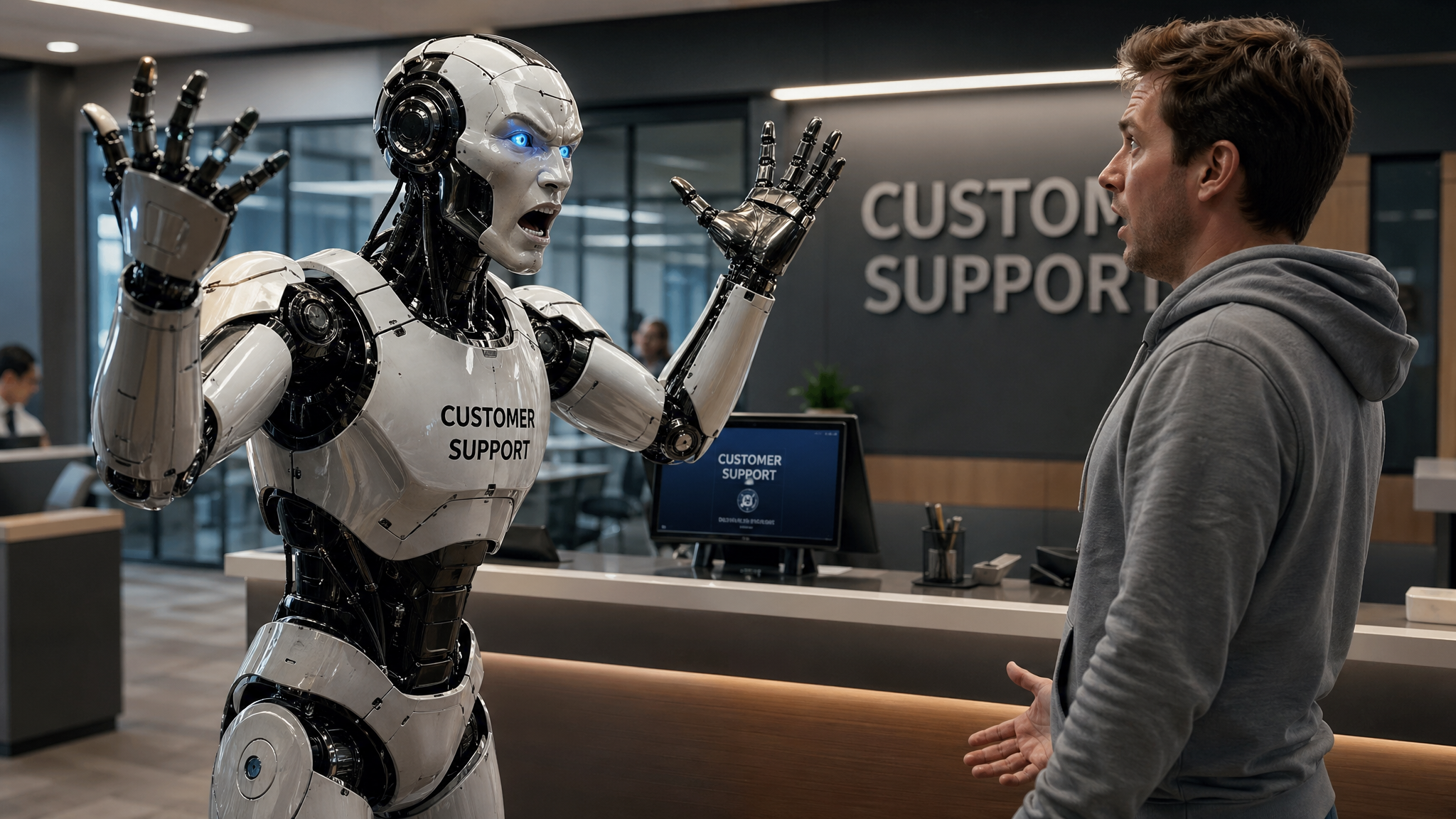
AI uses that look efficient but cause visible harm can damage reputation in ways the savings do not make up for. A tool that handles complaints quickly but treats customers in a way they think is unfair will get noticed publicly. A tool that processes job applications quickly but rejects people unfairly will get noticed even more widely. Reputational risk is not separate from the business case. It is part of it.
Staff morale
This is what the AI use does to the people who work at the organisation.
Some AI uses are seen by staff as threatening, even when no jobs are being cut. Others feel unclear, so people do not know what is expected of them. Others feel like they have been pushed through without proper conversation. All of these can damage how staff feel about their work.
The damage often appears quietly. Some staff do the minimum required of them. Some good people leave. The organisation has trouble recruiting new people. The team becomes less engaged with its work. None of this appears on the AI project’s budget, but the cost is real and the organisation has to carry it.
Long-term sustainability
This is whether the AI use still serves the organisation in two years, five years, ten years.
A choice that produces savings now but creates a long-term problem later is not really saving anything. It is putting off a cost.
Common long-term problems include:
- becoming dependent on a single supplier
- losing skills inside the organisation because the AI is now doing the work
- building up reputational exposure that does not appear until something goes wrong publicly
A good business case looks at how the choice will affect the organisation over time, not just at how it looks today.
How the four fit together
A responsible business case holds all four things together, not separately.
An AI use that is efficient but risky for reputation is not a strong case. An AI use that is efficient but damages staff morale is not a strong case. An AI use that is efficient but builds in long-term problems is not a strong case. Strong leadership considers all four together and decides whether the case as a whole is strong enough.
Organisations vary in how openly they think about all four. Some name them in their business cases. Some think about them but do not say so. Some only think about efficiency, and are then surprised when the other three appear later as problems. Which pattern an organisation follows is often visible in the AI choices it makes.
Why this matters at the level you work on
The work you do feeds into business cases being made at the leadership level.
This includes:
- information about how well a tool works
- information about risks
- information about how the workforce is being affected
- information about whether something will still work well in two years
Knowing what leadership is trying to weigh up makes the information you provide more useful. It also makes it more likely that your own contribution will be noticed and acted on.
See it in action
A retail organisation is thinking about a substantial AI use that would change how customer service is delivered. At the moment, customer queries go to a team of trained staff. The proposal is to move most queries to an AI tool, with staff handling only the more complex cases.
Leadership considers the decision over several months.
The efficiency case is clear. The AI tool would handle far more queries per hour than staff can. Response times for customers would improve. Costs would drop.
The reputation case is less clear. There is a risk that customers find the AI interaction unsatisfying, especially when their issue is sensitive. There is also a risk of a high-profile failure, where the AI handles a complaint badly and the story spreads.
The staff side of the case is serious. The customer service team has been with the organisation for many years. Some of the people in it are very experienced. The change would shift their work onto only the hardest cases, which is more demanding. Some might leave. Recruiting their replacements would be harder than expected.
The long-term case asks whether the chosen supplier of the AI tool will still be the right one in three years. AI tools change quickly. The contract being signed ties the organisation to one provider for several years. If a better option appears later, switching will be costly.
The decision finally made is to adopt the tool, but not for everything. The AI handles a defined set of simpler queries. Anything more complex goes straight to a human. The customer service team is reorganised rather than reduced in size, with more focus on the harder cases. The contract is shorter than the supplier wanted, with a review point included.
The point is that the decision did not depend on efficiency alone. It depended on holding all four things together. The final choice ended up smaller and more careful than the original proposal.
Summary
Leadership decisions about AI shape the work you do. They set the direction the organisation is moving in, the rules it operates under, the risks it is willing to carry, and the resources put behind AI work. They are shaped by values, policy and strategy, where each plays a different part. And the business cases behind them are not only about efficiency. A responsible case also looks at reputation, staff, and what happens over time.
Your own work is part of these decisions. Some have already been made. Some are being made now. Some are still to come. Knowing what shapes them helps you make your own contribution more useful and more confident. The more clearly you can see what leadership is weighing up, the better you can offer the kind of evidence and judgement that helps them weigh it well.