Specialist and Composite AI Tools
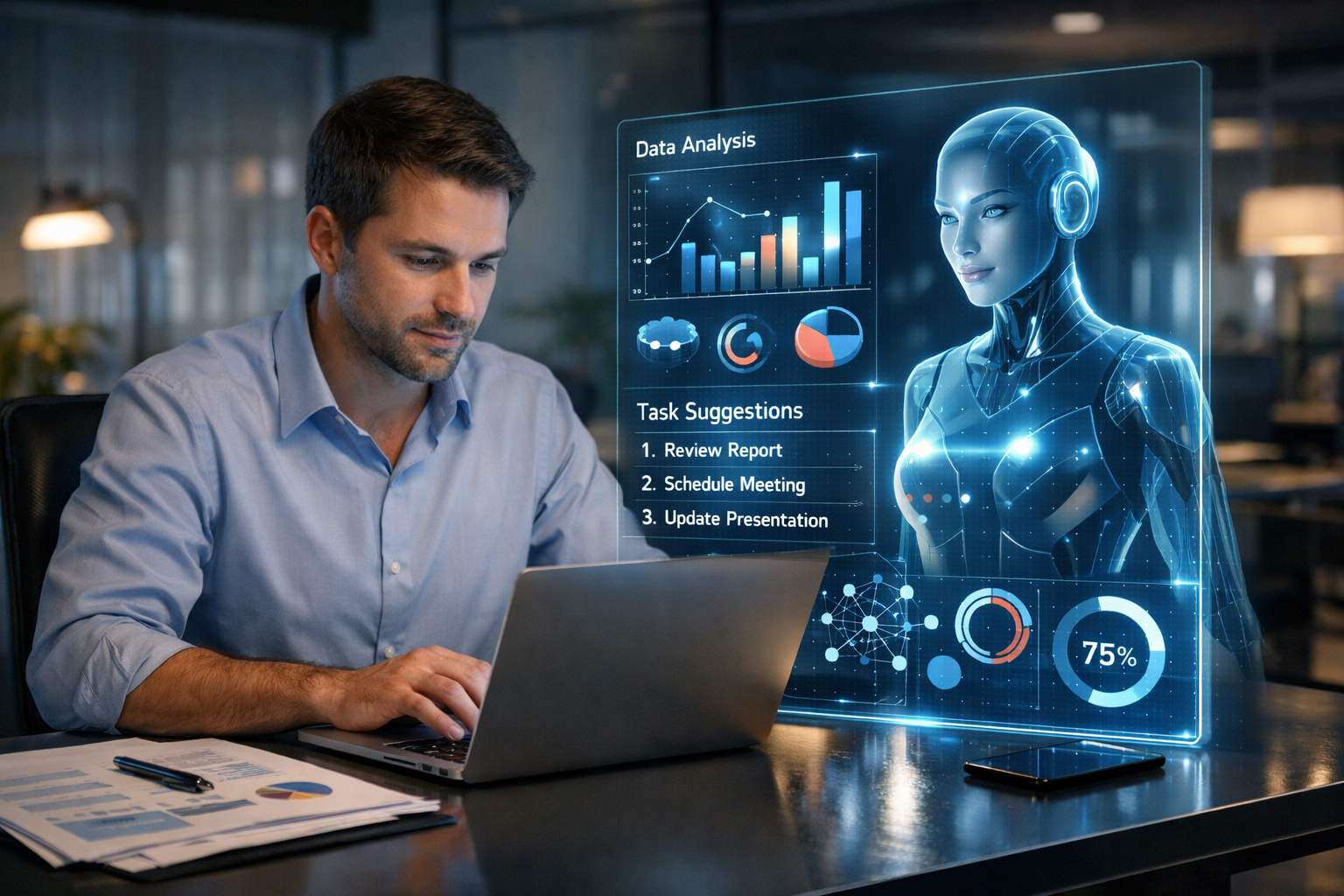
Putting AI to work inside an organisation means understanding the full range of tools available. General-purpose AI assistants and automation tools are only part of that picture. Much of what you will work with does not fit either of those categories. It will be specialist AI built for one specific job, composite AI that contains several models inside a single product, or agents that take actions in the world rather than just producing text. Each works differently. Each brings its own risks. Without a clear picture of what each one is, you cannot make sensible decisions about where to use them.
In this section you will learn:
- How to identify a specialist AI tool and explain what it offers over a general-purpose assistant
- How to recognise a composite AI tool and explain why most finished AI products you meet are built this way
- How to identify an agent and explain how it differs from a general-purpose AI assistant
- How to identify the main risks that come with composite tools and agents
- How to identify the main risks that come with relying on specialist tools
Specialist AI tools
A specialist AI tool is built for one specific job rather than for anything. It does that one job well, and the whole product is designed around it.
What makes a specialist tool specialist
Three things set a specialist tool apart from a general-purpose AI assistant asked to do the same work.
The interface is built for the job. A tool made for producing presentations looks and feels like a presentation tool. A tool made for voice generation looks like audio software. The screen, the buttons, and the settings are all designed around the work rather than around generic chat.
The outputs come out in usable form. A specialist presentation tool gives you an actual editable deck, not a description of what a deck should contain. A specialist video tool gives you an editable video file. A specialist music tool gives you an audio file you can use.
The product builder’s thinking about the work is built into the tool. Someone has decided what a good deck looks like, what order steps should happen in, and what settings should be the default. You benefit from that thinking whether you notice it or not.
Real examples
Specialist AI tools are everywhere now. Some of the best-known ones are:
- Gamma for presentations and decks
- Perplexity for research with cited sources
- Runway and Pika for video generation
- ElevenLabs for voice generation and voice cloning
- NotebookLM for working with a set of documents you provide
- Cursor for writing software inside a coding environment
- Midjourney for images
- Suno for music
Each of these could, in theory, be done with a general-purpose AI assistant and some other software. None of them would be done as quickly or as well.
What you get over a general-purpose assistant
You get an interface designed around the work, outputs in the exact format you need, and the opinions of people who understand the field built into the product. For a team trying to get a piece of finished work out by the end of the day, that matters.
What you give up
See it in action
Someone in a small marketing team needs a client presentation ready by the end of the day. They open Gamma, type a short description of what the deck is about and who it will be shown to, and press generate. Within a minute, Gamma produces a twenty-slide deck. The layouts are chosen automatically. The images are produced automatically. The suggested text is drafted automatically.
The same job done with a general-purpose AI assistant would look very different. The assistant would produce text for each slide, which would then need to be moved into presentation software by hand. Image prompts would need to be written separately. Layouts would need to be chosen manually. The whole process would take hours rather than minutes, and the result would not look as considered.
The specialist tool has done something the general-purpose assistant cannot do on its own. It has produced a finished piece of work in the right format, with choices already made about how the work should look.
Composite AI tools
A composite AI tool is one product that holds several AI models inside it and picks the right one for each part of the job. The user does not pick the model. The tool picks.
What makes a tool composite
A composite tool is not one AI doing the whole job. It is several AIs, each doing a piece of the work, pulled together inside a single product. You do not see them separately. You see one interface, press one button, and get one output.
A tool for producing decks may use one AI model to plan the structure of the deck, another model to draft the content on each slide, and another to produce the images. Three AIs, one product, one user action.
Why this pattern matters
A lot of AI reaches working life this way. Most finished AI products you meet will be composite tools, not a single AI model shown directly.
When someone uses Gamma to build a deck, they are not choosing a text model to write the content and an image model to illustrate it. Gamma chooses. When someone uses Perplexity to research a topic, they are not separately searching the web and then asking an AI to summarise what was found. Perplexity does both in one move.
Two patterns you will see
Composite tools come in two main patterns.
Multi-Model
Multi-model products
One product contains several AI models, each handling a part of the work. Gamma uses a language model to plan the deck, an image model to produce visuals, and a layout engine to arrange them. Canva’s AI features sit across several models for different jobs. Notion AI routes different kinds of request to different underlying models.
Model
Model routers
A model router is a product that gives access to many AI models through one interface and picks which one answers each request. Poe and OpenRouter are the best-known. You may not use these directly. Tools you do use will often have a model router built inside them.
What this means for risk
The tool is doing more than one AI job at once, and the risks combine. If the image model in a deck tool produces something that does not fit the tone of the presentation, you may not be able to tell which part of the product made the wrong call. If the model that summarised a source misread what it said, the citation looks correct but the summary may not reflect the source.
See it in action
Someone uses a composite AI tool to produce a short marketing video for a new product. They type a description of the product and the audience, upload a few reference images, and press generate. The tool produces a thirty-second video with a voiceover, background music, on-screen text, and stock footage woven together.
Inside that one user action, the tool has made four AI decisions. A language model has written the script. A voice model has turned the script into a voiceover. A music model has produced the backing track. A video model has put the images and footage together in a sequence. The user has not chosen any of these models. The user has not seen any of these decisions being made.
The output looks like one thing. It was produced by four things.
Agents
An agent is an AI tool that takes actions in the real world rather than just producing text. Where a general-purpose AI assistant gives you words, an agent gives you outcomes. It searches for something, reads what it finds, decides what to do next, does it, checks the result, and decides what to do next again. It keeps going until the job is done or it runs out of options.
An agent has three parts. A model that decides what to do. A set of tools it can use, such as web search, reading files, sending emails, or calling other software. A loop that lets it keep working step by step. This loop is sometimes called an agent loop.
How an agent differs from a general-purpose AI assistant
A general-purpose AI assistant produces text when you ask it a question. The interaction is one turn of yours, one turn of the assistant’s, and then it stops. Whatever the assistant wrote, you decide what to do with it.
An agent produces actions. When you give it a task, it works out what needs to happen, takes the first step, sees the result, takes the next step, sees the result, and keeps going. By the time you see the output, a chain of decisions and actions has already happened. What you see is the end of that chain, not the middle of it.
Real examples
Claude Code writes software and runs it to check the result. If the code does not work, it reads the error output, fixes the problem, and tries again. It keeps going until the code works or it gives up.
ChatGPT’s agent mode can browse websites, fill in forms, and take multi-step actions for you. Given a task like find me three quotes for a replacement boiler in my postcode, it will search, click through, fill in forms, and come back with the quotes.
Zapier’s AI agents sit inside workflows. One can work through an inbox, decide which emails matter, and act on them.
Research agents inside Perplexity, ChatGPT, Claude, and specialist tools can run multi-step literature searches and produce reports.
See it in action
Someone in a finance team uses an agent to process a batch of supplier invoices. The task given to the agent is to extract invoice details, enter them into the finance system, and flag anything that looks unusual.
The agent opens each invoice. For most of them, the format is familiar. The details come out cleanly and go into the system.
Partway through the batch, the agent hits an invoice in a format it has not seen. The totals are in an unusual place. A date is formatted oddly. The agent makes a reasonable guess about which number is the total and which is a line item. It enters the data. It moves on.
Nobody reviewed that guess. The agent did not stop and ask. The entry is now sitting in the finance system looking like every other invoice that came through the batch, including the ones where the extraction was straightforward.
Risks that come with these kinds of tool
Specialist, composite, and agent tools bring four risks of their own. These risks are specific to how these tools are built and used.
Hidden model choice
In a composite tool, you cannot see which AI model did which part of the work. When something goes wrong, it is harder to work out where. A deck produced in Gamma might contain an image that does not match the tone of the presentation. You cannot tell which image model made it, or why it chose that image over another. You cannot go to the image model and correct it separately. You can only regenerate and hope for a better result.
Cascading errors in chained decisions
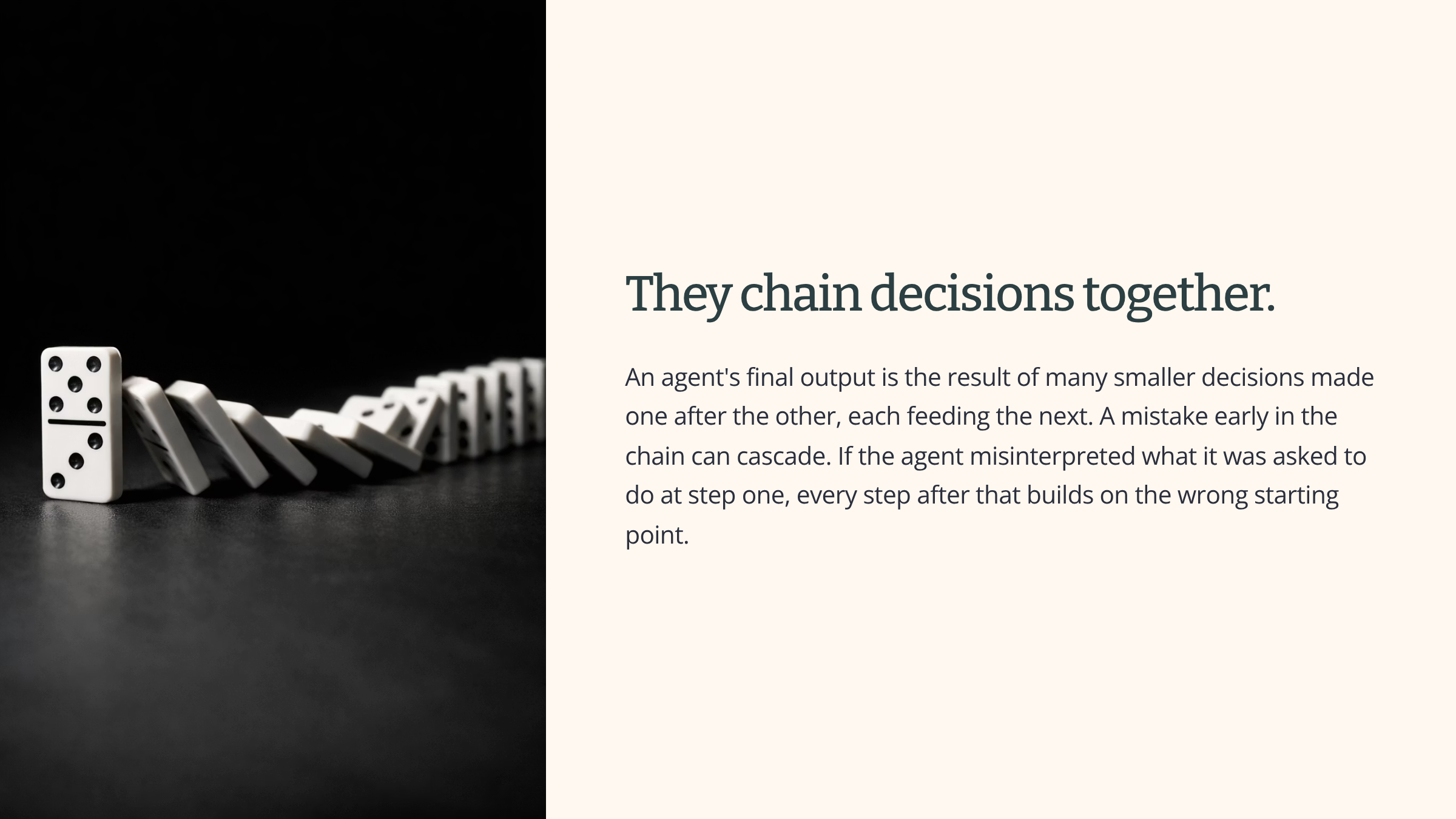
In an agent, a mistake early in the chain feeds every later step. A small misreading at the start can produce a large wrong outcome at the end. A research agent asked to find papers on a specific topic might misinterpret the topic in its first search. It then works through ten papers against that wrong topic and produces a report confidently describing work that does not answer the actual question. The report looks thorough. It is well-structured. It is also completely wrong.
Actions that cannot be undone
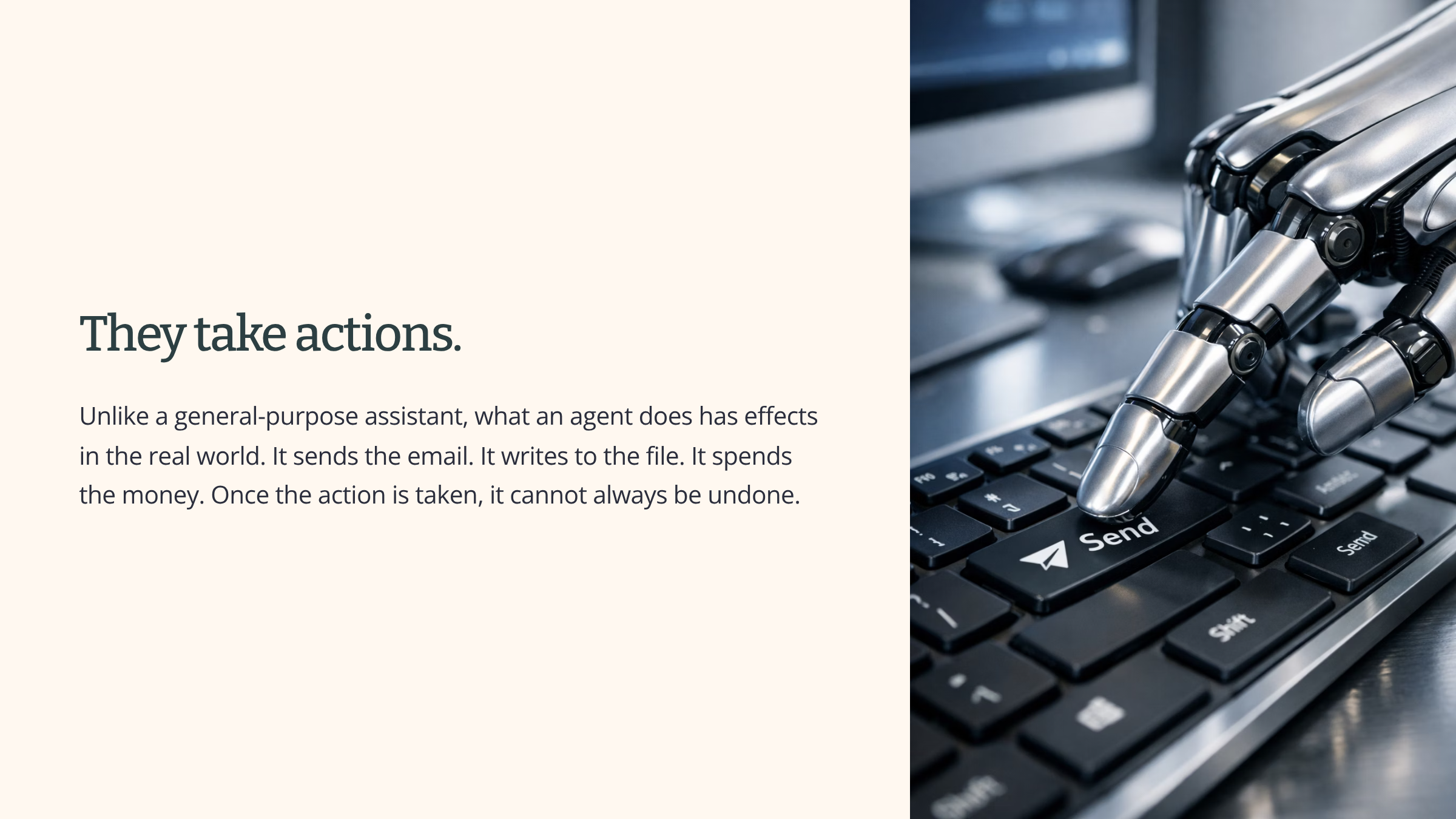
Agents act in the real world. Some actions can be reversed. Many cannot. An agent that sends an email to a customer list based on a misunderstanding of the task has sent the email. It cannot be taken back. An agent that deletes files cannot always restore them. An agent that transfers money or books a flight has taken a real action with real consequences. Undo is not always a button available to you.
Tool lock-in and provider dependency
Specialist tools build your work into their environment. If the tool changes its pricing, changes its terms, changes its output format, or goes out of business, your work may not come out cleanly. A team that produces six months of marketing material in a specialist video tool has a problem if that tool raises its prices sharply, removes a feature the team depended on, or closes down. The work does not necessarily come with the team if they move to a different tool.
See it in action
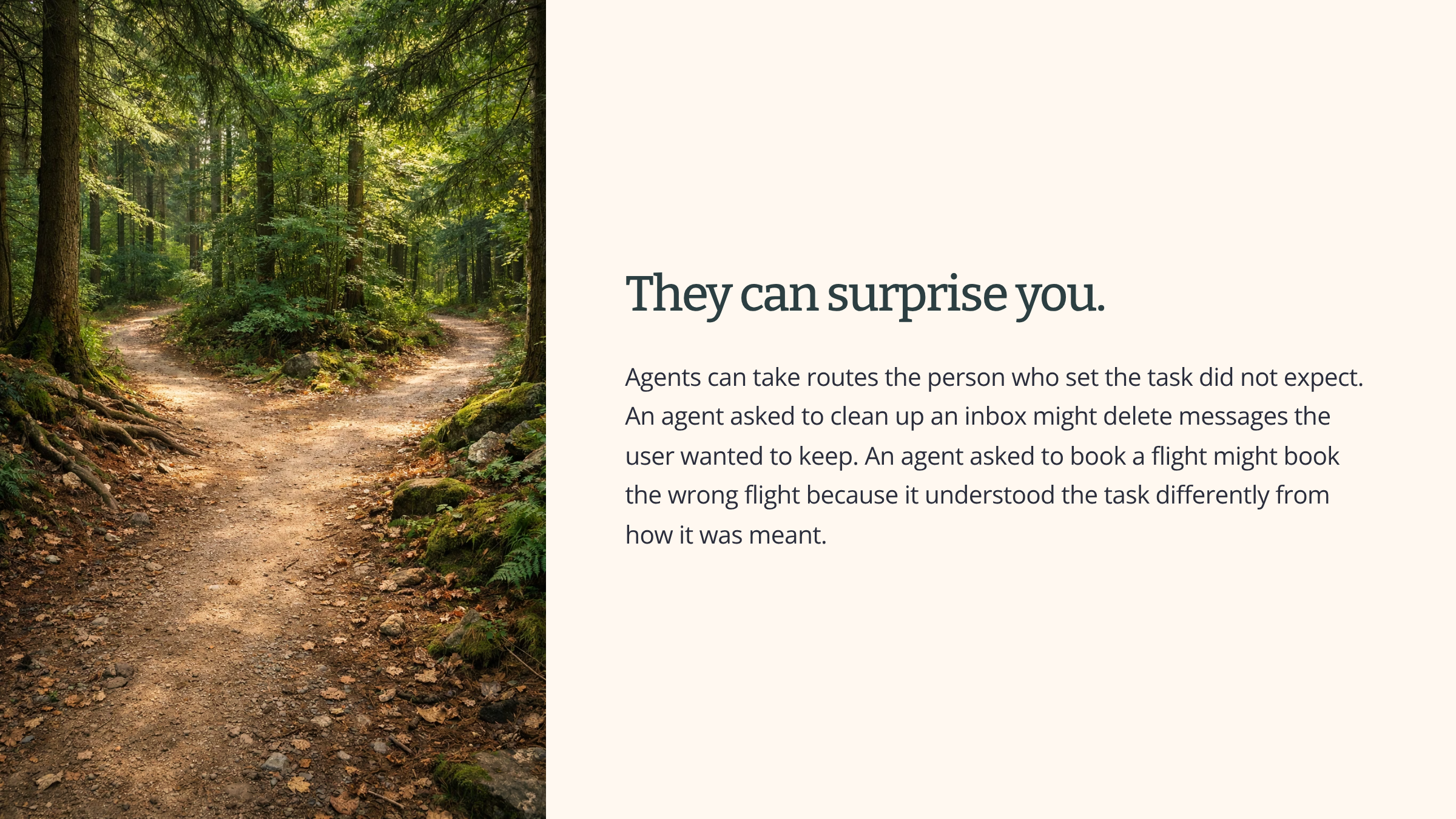
Someone in a sales team uses an agent to tidy up their customer relationship system. The task given is to go through contacts that have not been active for six months and archive them, keeping only those with recent activity.
The agent starts. It checks the first contact. No activity in the log for eight months. It archives the contact. It moves to the next. Seven months, archive. Next. Nine months, archive. The agent works through several hundred contacts in about ten minutes.
The user goes to make a coffee. They come back and ask the agent to summarise what it did. The agent reports that it has archived 342 contacts. The summary looks tidy. The user opens the system to check.
Half of those 342 contacts were customers who had paused at a pricing discussion at the sales team’s request and were meant to be approached again this month. The activity logs showed no outward-facing activity because the sales team’s own policy was to hold off contacting them until pricing was cleared. The agent could not see that context. It followed the rule it was given.
The archives can be reversed, but some of the contacts will need to be re-approached and several of the conversations will need to be rebuilt from scratch. One deal, in progress for three months, has already been cancelled by the customer because they heard nothing back after the usual follow-up time.
The action has been taken. Its effects cannot all be reversed.
Summary
You now know three more kinds of AI tool beyond general-purpose assistants, embedded AI, and automation.
A specialist AI tool is built for one specific job and produces finished work in the right format. Gamma, Perplexity, ElevenLabs, Cursor, and Suno are examples. You get speed and polish. You give up flexibility and pay a separate subscription.
A composite AI tool holds several AI models inside one product and chooses which one does which part of the work. Most finished AI products you meet are composite. The user does not see which model did what, which makes problems harder to trace.
An agent is an AI tool that takes actions in the real world rather than just producing text. It works in a loop, chaining decisions together until the task is done. Claude Code, ChatGPT’s agent mode, Zapier’s AI agents, and research agents are examples.
Four risks come with these kinds of tool. Hidden model choice makes composite tools hard to debug. Cascading errors in chained decisions can turn a small mistake into a large wrong outcome. Actions taken by agents in the real world often cannot be undone. Specialist tools can lock your work into their environment in ways that hurt if the tool changes or disappears.
That is the picture you carry into the rest of your work with these tools.